

Letter of the Year 2026
Ogunda Ogbe
Released by Yoruba Ifa Orisa Association of Mexico and Yorùbá Society of Mexico
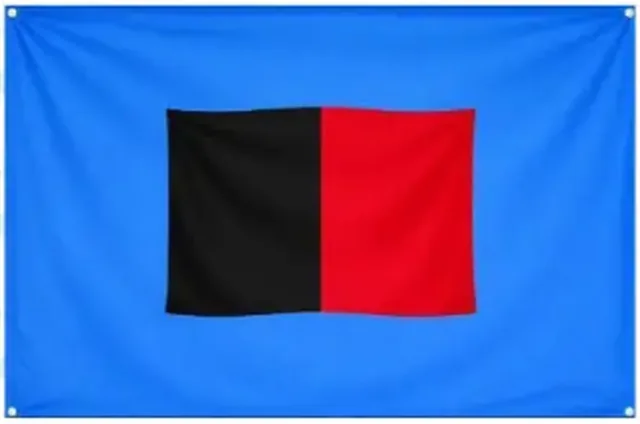
fondo azul con rectángulo central mitad negro y mitad rojo
Ask Akín about this Letter
What it means for you and what you can do: Akín explains it in the app, in plain words.
- Country
- Mexico
- Ruling sign
- Ogunda Ogbe
- Witnesses
- Ofun Meji
- Ruling orisha
- Elegba
- Companion orisha
- Yemayá
The Letter
LETTER OF THE YEAR 2026
MEXICO
SOCIEDAD YORÙBÁ DE MÉXICO «CENTRO DE ESTUDIOS TEOLÓGICOS YORÙBÁ DE MÉXICO A.C.»
Sociedad Yorùbá de México
«Centro de Estudios Teológicos Yorùbá de México A.C.»
(logo)
**Odù Ifá Fún Ọdún Tuntun Ẹgbẹ̀Rún Méjì Ogún Mẹ́Fà, Ilú México**
Odù of Ifá intended to guide the New Year two thousand twenty-six, in Mexico.
**INTRODUCTION**
The Letter of the Year was born with the purpose of walking together under a single spiritual guidance. Those of us who continue to take part in this exercise do so with the conviction that the strength of the Yorùbá religion in Mexico lies in the unity of the religious people, in mutual respect and in the shared responsibility of preserving a tradition that belongs not to a single person, but to the whole community.
To consult oneself and to consult a nation through the Letter of the Year is an exercise of communal spiritual responsibility. In the Afro-Cuban Yorùbá tradition, collective consultation recognizes that destiny is not walked alone: peoples, like individuals, possess a collective Orí that must be listened to with attention and humility.
This act is not sustained by individual interests, personal prominence or particular benefits. The consultation of Ifá, carried out with rigor and adherence to tradition, has the purpose of receiving the word that corresponds to the time we are living. From this consultation emerges the ruling Odu, whose energy, teachings and warnings guide the collective destiny during the cycle that begins. Every effort, every contribution and every resource devoted to this work responds exclusively to the common good and to the correct performance of a sacred act that belongs to the community.
The Odu that governs this year is not presented as an imposition, but as a guide, which calls for reflection, correction of character and the strengthening of values. Through it, Ifá reminds us that no spiritual path is walked alone and that the balance of destiny is reached through cooperation, humility and the recognition of the other as an essential part of the same spiritual body.
The Sociedad Yoruba de México seeks to be a meeting point for babalawos, olorisas and followers, recognizing that, despite the diversity of lineages, houses and ritual expressions, we share a single root and a single responsibility before Olódùmarè, the Òrìṣà and our ancestors. The Letter of the Year and its ruling Odu exhort us to avoid division, to reject misinformation and to practice our Faith through actions of respect, coherence and commitment.
We likewise honor our ancestors, who preserved this knowledge in times of adversity and taught us that the strength of our religion lies in the communal sense and in the responsible transmission of knowledge. Following their example, we reaffirm that the message of Ifá received in this year is not the heritage of an individual or of a closed group, but a common spiritual good of the Yorùbá religious people of Mexico.
Finally, we express our deep gratitude to all the people who, with faith, discipline and communal spirit, have taken part in the making of the Letter of the Year. Their presence, collaboration and trust confirm that unity is possible when the purpose is genuine and shared. We respectfully invite all practitioners, religious houses and related associations to approach the Sociedad Yoruba de México «Centro de Estudios Teológicos Yorùbá de México, A.C.», an institution committed to strengthening the tradition, promoting new projects and working together with national and international associations, always for the benefit of the community and the future of our religion.
May this New Year Olódùmarè bless our homes, may Ifá guide our decisions and may the Òrìṣà accompany every step of the path.
On behalf of the Sociedad Yoruba de México
Centro de Estudios Teológicos Yorùbá de México, A.C.
Juan Ríos – Otura Orire
President of the Council of Elders
**Odù Tóyàlè - Ruling Odu ÒGÚNDÁ ÒGBÈ**
(figure of the sign: two columns of four; the left column with four double marks «I», the right with three «I» and the last «O»; above it, the sign «+»)
Odu lọkuta lẹkẹ: OFUN MEJI
(Odu that is influencing the ruling Odu through its destiny)
Profecy: Irẹ́ Aiku Ọ́yale Tẹ́si Timbẹ́lajẹ̀
(Blessing of long life and stability, which arrives and settles in a full and effective way)
Lésè Òrúnmìlà.
(by the command of Òrúnmìlà)
Ki ni se ebo? Beeko
(Is an offering made? No.)
Onișẹ ara: Awan Olọkun
(the body must be cleansed with an Awan a Olókun)
Onișẹ Ori: Beẹkọ
(No work or rite is performed for Orí)
Onișẹ́ Egun: Eyẹle gbogbo tẹ́nuyẹ̀n
(yes, work is done for the ancestors with their ingredients)
Ẹbọ: akukọ mẹta bọọlu eran maluu mẹta
(3 roosters, 3 balls of ground beef, the established ingredients)
Orisa regente: Elegbara
Orisa que acompaña: Yemoja
Bandera: Fondo azul, en el centro rojo y negro.
(image of the flag: blue background, with a central rectangle half black and half red)
**EXPLANATION**
The Odù Ògúndá Ògbè manifests as a sign of firmness and lasting stability, provided that spiritual mandates are respected and one acts with discipline and uprightness. Ògúndá Ògbè, as the Odu of the year, and Ofún Méjì as first and only witness, express that the year is governed by a sign that points to constant work, sustained effort and the need to act with firmness and responsibility. It is a period in which results do not come immediately, but as a consequence of order, discipline and constancy. Every advance requires real commitment and respect for the established norms; shortcuts, improvisation and unnecessary confrontation can bring setbacks.
The presence of the witness sign reinforces a call to awareness, mental clarity and uprightness. This year demands acting with truth, avoiding arrogance and not abusing power, authority or trust. Decisions must be made with a cool head, weighing consequences, since whatever is done will have lasting effects. It is a time to correct mistakes, close cycles that no longer work and act with transparency.
Together, both signs warn that stability and protection are available, but they are not automatic. They are attained through honest work, respect, care of the body and attention to the home. It is recommended to avoid violence, excesses and unnecessary conflicts, to strengthen collective unity in every area of life and to maintain an ethical conduct both personally and in society. If in our personal life, company, business or collective we are not able to find order and awareness in our conduct, ruptures may arise that affect the stability achieved.
The prophecy indicates a blessing of long life and stability, which arrives and settles fully and effectively; that is, permanence and continuity of projects. It is not a passing well-being, but one that is affirmed and takes root. Òrúnmìlà endorses this year and reminds us that uprightness is the foundation of everything we undertake, and that stability is preserved through moderation, obedience and spiritual cleansing, not through forced interventions. The offering or Awan for Olókun will help us with deep physical and emotional purification, and it will also help us unblock stagnations; that is, the Awan to Olókun is understood as a way of cleansing whatever prevents movement and stability. This year Ori requires nothing specific, but the Odù demands respect, serenity and good decisions. Forcing something would alter a balance already granted.
Work for the ancestors (Ẹgún) is indicated, and it is confirmed that the Ìrẹ̀ is sustained thanks to ancestral support, and that a lack of respect for memory, for elders or for lineages could affect the promised stability. It is advised that the indicated Ebo be carried out by approaching the elders of one's religious house for its correct execution.
The Òrìṣà who rules the Mexican nation in the year 2026 is Ẹlẹ́gbára, who governs the paths. Under Ògúndá Ògbè, order, correct speech and responsibility are demanded, for any deviation may close paths that were already open.
The Òrìṣà who accompanies is Yemọja, stabilizing mother and protector of descendants. Ògúndá Ògbè announces a period of firm and prolonged stability, backed by Òrúnmìlà, sustained by Ẹgún and protected by Ẹlẹ́gbára and Yemọja, provided that order is respected, spiritual cleansing is maintained and one acts in accordance with what has been revealed by Ifá.
**MEXICO: A PERSPECTIVE FROM IFÁ**
When observing Mexico under the sign Ogúndá Ògbè, with Òfún Méjì as the sole witness, we can conclude a message of containment, reordering and consolidation, rather than of rupture or collapse. Ogúndá Ògbè points to a country with strength, capacity for work and resilience, but one that needs order, discipline and clear direction so that this strength does not turn into internal confrontation. Mexico is not a defeated nation, but a tense one, where the impulse for change exists but must be guided with responsibility to avoid unnecessary conflicts, social violence or hasty decisions.
The presence of Òfún Méjì as the sole witness reinforces the idea that the country's destiny is deeply tied to ethics, the word and the consequences of actions. Òfún Méjì speaks of clear limits: what is done without conscience, sooner or later is returned. From this viewpoint, Mexico finds itself at a moment in which lies, corruption and lack of transparency may have more severe effects than in other years, while honesty and coherence can generate lasting stability. Taken together, the sign suggests that this is not a time for improvisation, but for inner adjustment. The country needs to strengthen its basic structures: family, community and its institutions. Well-being will not come from quick solutions, but from firm processes, though slow, that are sustained over time.
Ifá also warns that Mexico has ancestral protection and capacity for recovery, but this protection is not automatic: it depends on respect for historical memory, for elders and for cultural roots. When that bond is broken, stability weakens. The general conclusion is clear: Mexico has the possibility of improving in order to achieve stability, provided it acts with order, responsibility and truth. Ogúndá Ògbè with Òfún Méjì does not announce destruction, but a test of collective maturity, where personal decision will have consequences for the community, whether social, political or local; the coherent voice of the individual will carry real weight in the destiny of the country.
**RELEVANT STORIES AND THEIR INTERPRETATION**
**THE DESTRUCTION OF THE HUMAN BEING BY PORK
In Odení Ifá there lived an awó named Omodélé Awó, who was accompanied by a great secret that his father had left him before dying. From time to time he would go to the secret and call it in this way: *eyèné eyé baba Omodélé Awó mayelé égún malékun orí ní ayé*, and he would offer it an eyelé, and he would see how his affairs and his people prospered through the great secret of his late father. In that land everyone devoted themselves to raising animals: some raised sheep, horses, cows, hens, roosters. This land was prosperous.
One day a man arrived in the land of Odení Ifá with a few pigs, singing: *eléde yení, eléde yení fún l'òyè ikú l'óré o, mayémi arún, mayémi ofó.* As he advanced, everyone looked at that man with the pigs in astonishment, because pigs had never been raised there. He chose a place and settled with his pigs, and as the pigs multiplied, the
other animals of that land began to die. Little by little the people grew alarmed and went to the house of Omodélé Awó to see what was happening to the animals that were dying.
When they arrived at the awó's house, he was calling upon the secret of his late father, and upon being interrupted, the secret said: this land is rotting from the excrement of the pigs; tell my son that this man is Omogú and came with the pigs to destroy your tranquility. The people became enraged and went to where the strange man was and killed him, together with the pigs, and began to eat them.
At that moment Omodélé Awó rose from the ground, and Elegbá entered running with his bell, singing: *ikú bawá o, égún bawá o, eléde yení bawá o*. Omodélé Awó said: they have gone mad. He took the okpẹlẹ and saw Ogúndá Bíodé, where Orúnmìlà told him that his people were going to begin dying slowly because they must not eat the flesh of that animal.
Omodélé Awó went out to the street, took one of the pigs and came to where the secret of his father was, and in the company of Elegbá they gave it to him. The secret spoke and said: my son, never eat this animal you have given me, for it will be your destruction, and next time you bring it to me, bring it to the sea. To iban Eṣù.
**COMMENTARY**
The story of Omodélé Awó teaches that not everything new or external is compatible with the balance of a community. In the land of Odení Ifá, prosperity was sustained while there was harmony among people, animals, and established practices. The arrival of the pigs did not cause immediate harm to humans, but it did bring a progressive deterioration of the environment, first visible in the death of other animals, which functioned as an early sign of imbalance that was not met with due caution.
Ifá shows that warnings usually manifest indirectly before becoming a greater problem. The people's mistake was not only eliminating the visible culprit, but consuming what was already altering the environment, believing the risk had ended. The announcement of deaths "little by little" reflects silent and cumulative processes, similar to the way many viruses and diseases act.
This message is especially clear in light of recent experiences such as COVID-19, whose possible animal origin has been pointed out by various reports. This is not about generating fear; Ifá also reminds us that human beings should not live in fear of the unknown, for fear paralyzes and clouds judgment. However, it warns that courage is not recklessness. In this new year, it is advised to move forward with openness, but with care in the decisions made, weighing consequences and heeding the signs before acting.
The teaching is not alarmism, but collective responsibility: maintaining attention, learning from previous experiences —as happened in its time with the screwworm in livestock—, respecting scientific and health warnings, and acting with prevention. The protection of the people depends on not minimizing invisible risks and on walking this new cycle with awareness, balance, and prudence.
We do not point to any particular species; the counsel is to understand that diseases can arise when initial alerts are ignored, when vigilance is lowered, or when the balance between human beings, animals, and the environment is broken.
**OLOFIN AND HIS BROTHER ABITA**
In ancient times Olofin lived on earth with his brother Abita (the Devil); they did not share the same opinions, since one preached good and the other evil. Abita said to Olofin: You are governing very badly because you gave power to your children. Olofin replied: What does that have to do with it, when everyone already respects me and listens to me? Abita said: when they know the power they have, they will not need you nor call on you. I am leaving —he said to Olofin—; far away in hell, I will watch all your disobedient children.
When Ogún and Babalú Ayé saw that Abita had left the earth and left Èṣù as his representative, they began to do their mischief: one as lord of diseases, and the other as god of war. Between the two of them they entertained Èṣù with sweets in order to turn him into a gluttonous child, but Èṣù, in order to find out what they were plotting, accepted. Babalú Ayé and Ogún: one made people sick and the other killed when they were not offered offerings; one was very fond of corojo palm nuts and the other liked to get drunk on palm wine.
Èṣù brought the complaints to Olofin: they killed, but they could not get rid of the victims; I prevented it. Since Abita was aware of everything happening on earth, and he laughed at his brother, so much so that Olofin, ashamed, decided to abandon the earth to establish his kingdom in the sky. Olofin left Obàtálá in his place, with the instructions to follow. Obàtálá could not dominate them and, complaining to Olofin, he told him: you will see how I dominate both of them.
He sent his message through the sun and told Olórun to tell the river goddess that her waters would dry up as a punishment, and that is how he defeated Babalú Ayé and Ogún, because the palm and corojo bushes dried up. Both went to ask Olofin for forgiveness, and from that day on they would do what he asked and obey him in everything.
**COMMENTARY**
This patakín teaches that true power lies not in dominating, but in knowing how to govern with balance. Olofin represents the order, the consciousness, and the authority that seeks the common good; Abita symbolizes the temptation of the ego, the abuse of power, and the idea that human beings can live without limits or responsibility. When Abita withdraws and leaves disorder sown, forces act without control: sickness, death, and suffering appear. Ogún and Babalú Ayé are not evil by nature, but when they act without restraint and driven by excess, they become causes of destruction. Èṣù, by accepting distractions, represents the lack of attention and the carelessness with which important decisions are sometimes made. Without vigilance or responsibility, chaos advances without resistance. Yet Èṣù also fulfills his function by reporting what is happening, reminding us that the truth always finds a way to come to light.
Olofin's withdrawal from the earth symbolizes that order cannot be imposed by direct force. The punishment does not come as violence, but as the withdrawal of abundance: the river dries up, and the palms and corojo as well. When balance is broken, life itself stops to force reflection. The final request for forgiveness shows that power recognizes its limits when it faces the consequences of its actions. The patakín concludes by teaching that collective well-being is only sustained when each force respects its function, when one acts with responsibility, and when it is understood that every action has effects that come back.
**THE 31 WARRIORS**
In the Kingdom of Ògún Irín Dúdú there were 31 warriors who had the custom of setting out together on their expeditions. One day they agreed to go to the neighboring village, but one of them suggested to his companions that they go to consult Orúnmìlà, and all of them refused. The prudent warrior, whose name was Okanlé Logún, refrained from leaving without first seeing Orúnmìlà and went to his house. Orúnmìlà cast Ọ̀ṣọ̀dè for him, saw this sign, and prescribed ẹbọ, which he performed. When the ẹbọ was finished, Orúnmìlà took two ìgbá: one with omi tútù (water) and the other with ẹrẹ níná (carita beans), giving them to Okanlé Logún and ordering him to place them on the road, the one with omi on one side and the ìgbá with carita beans on the other, and between them, in the nearby undergrowth, 30 daggers. When the 30 warriors were returning tired and thirsty from their warlike expedition, bringing with them numerous slaves who carried the booty, they were all thirsty and hungry and therefore very agitated. Then they saw the ìgbá with water beside the road. When they went to drink the water, a fight broke out around the ìgbá of water to see who would take it. Then one of the warriors found the daggers; he seized one, and the others who saw it also armed themselves and began a terrible struggle over the ìgbá of water, which ended in the death of the 30 warriors.
Okanlé Logún, the prudent warrior, watched the battle hidden in the mountain, at a short distance. When he saw that all his former companions were dead, he came out and seized the slaves and the booty, took the ìgbá of ẹrẹ níná, fed them, and led them to his house, becoming a powerful man of means thanks to Orúnmìlà.
**COMMENTARY**
This story conveys a very clear teaching about prudence, consultation, control of impulse, and the consequences of acting without awareness, both on an individual and a collective level.
The narrative shows two opposing attitudes. On the one hand, the thirty warriors represent impulsive action, excessive confidence in strength, acting as a group without reflection, and the idea that physical power is enough to guarantee success. They go out to war without consulting, without spiritual preparation, and without weighing the consequences of their acts. On returning, fatigue, thirst, and hunger make them irritable, and this lack of self-control leads them to turn against one another. They do not die at the hands of the enemy, but because of their own inner disorder.
Okanlé Logún embodies prudence and wisdom. Unlike the others, he understands that not everything is resolved with force and that before acting it is necessary to consult, listen, and prepare. His decision not to go to war is not cowardice but awareness. By following the instructions he received, he neither attacks nor provokes; he simply lets the consequences of others' disorder manifest on their own.
Water represents a basic and urgent need; the daggers symbolize what happens when desire has no limits or order: competition turns into violence. The story teaches that when people act dominated by need, fatigue, or ambition, they lose their judgment and destroy one another.
The cooked beans, by contrast, represent simple sustenance, the food that calms and orders. Okanlé Logún does not triumph through war but through foresight, patience, and the good use of knowledge. His prosperity does not arise from the shedding of blood but from having done the right thing at the right moment.
In essence, this patakín teaches that whoever consults, controls themselves, and acts with a cool head survives and prospers, while whoever lets themselves be carried away by impulse, haste, and ambition ends up losing everything, even when they believe they are strong or numerous.
**THE ROAD WHERE ORÚNMÌLÀ ATE ABO.**
When Amọuiṣọkun (Ṣàngó) was the ọba of Ọyọ, in a nearby forest lived the Àbọ, whose king, a black Àbọ, was called Asùsùmásà, who had his throne in a tree called Ìgì Àbọ. Asùsùmásà boasted of being a sorcerer and of commanding all the egún of the forest to destroy his enemies. After a short time, his fame clashed with that of the ọba of Ọyọ, and he began to wage war against him. But he knew that the ọba of Ọyọ's counselor was a great diviner named Orúnmìlà, so he decided to eliminate him as well and, using his son, the lamb, sent him an invocation to bring about his end.
The son of Asùsùmásà blew some powders at the door of Orúnmìlà's ilé, and he inhaled the powder and fell gravely ill: his head ached and blood accumulated in his brain, and he could not get up. Then, already dying, Orúnmìlà consulted Ifá and this sign appeared to him. His secretary Ogún brought him an infusion of kòlà kùálà root and ginger; Orúnmìlà drank it and the clot that was forming in his brain dissolved. Then ẹbọ was made with àtìfàn ilẹ and bọgbọ tenúnyen, which he took to the foot of a tree.
When Ṣàngó learned what had happened to Orúnmìlà, he said to him: «Take your weapons and let's go place the ẹbọ at Ìgì Àbọ, to finish off Asùsùmásà once and for all». He said the same to Ogún, but Orúnmìlà replied: «You take your weapons; I take Àtẹ and Ìròfà, which are mine». The three set out together, guided by Ẹ̀ṣù, to place the ẹbọ. Since Orúnmìlà was still convalescing, Ṣàngó carried him on his shoulders, and they arrived at the foot of the Ìgì Àbọ. Orúnmìlà took out his divining tray and marked the àtẹ̀nà, placed the ẹbọ at the foot of the tree, and Ogún cut a stick from it so that Orúnmìlà could lean on it like a cane.
Orúnmìlà began his prayer. Upon hearing the prayer, Asùsùmásà, the ọba of bọgbọ Àbọ, came out full of fury and charged at the three. Ogún threw a chain around his neck and entangled him, knocking him down, at the same moment that Ṣàngó cut off his head. With the knife, Orúnmìlà was given the Àbọ's head, and everyone ate and bathed in his blood and sang. Orúnmìlà gave two akùkọ méjì to Ṣàngó and Ogún and food to Ẹ̀ṣù. They all sat down to rest on the trunk of Asùsùmásà, and Ṣàngó, Orúnmìlà, and Ogún became king, diviner, and general, respectively, of the land of Ọyọ.
Find out how it affects you, based on your sign
In the app, with your sign and your guardian angel: a personal reading of this Letter.
**COMENTARIO**
This story teaches that power without balance or ethics ends up destroying itself, even when it appears strong or feared. Asùsùmásà represents those who use fear, manipulation and hidden forces (witchcraft) to impose their will. His dominion is not sustained by justice or order, but by intimidation and abuse, which inevitably provokes conflict with legitimate authority and with true knowledge.
The attack against Orúnmìlà is not only an attack on a person, but on wisdom, foresight and correct consultation. The illness he suffers —headache, accumulation of blood, immobility— symbolizes what happens when a society is attacked by hidden decisions, betrayals or irresponsible actions: first mental clarity is affected, then the capacity to rise and act. It is a clear image of a crisis that does not manifest suddenly, but advances silently.
The recovery of Orúnmìlà shows one of the central messages of the Letra del Año: knowledge, appropriate medicine and a well-directed ritual can reverse even critical situations. It is not brute force that saves, but the combination of knowledge, correct action and respect for processes. Here the importance of attending to warning signs in time and not minimizing symptoms is emphasized, whether physical, social or collective.
When Ṣàngó proposes going to war, Orúnmìlà accepts, but makes clear that each one must act from their function. The story teaches that stability is not achieved by force alone nor by words alone, but through the coordination of authority, knowledge and action. Ẹ̀ṣù guiding the way reminds us that every solution requires correct direction; without it, even good intentions fail.
The fall of Asùsùmásà symbolizes the end of systems sustained by corruption, deceit or invisible harm. His defeat occurs in the very place where he believed he had absolute power, which indicates that imbalances are corrected from the root, not from the surface. The fact that everyone bathes and shares that moment marks the closing of a contaminated cycle and the restoration of order.
Finally, the establishment of a new order with clear functions —authority, wisdom and defense— reflects the call of the Letra del Año to rebuild firm structures, where each part fulfills its responsibility. It is not about imposing, but about organizing; not about dominating, but about balancing.
**LA PACIENCIA Y LA SABIDURIA**
Olódùmarè spoke with several deities before they descended to the earth, and to each one he gave a mission and granted important powers that they would deliver to humans. He told the deity of wisdom and patience that only she would hand over the power to possess riches and well-being, but warned her that to have them she would have to be humble and generous in all places and at all times, and that she could only give them to men who behaved in the same way. Orúnmìlà performed divination to obtain wisdom and patience when seeking followers before arriving on earth. He also performed divination for Onígédé, when he was looking for a prince for his daughter. Both were told to make sacrifice, and so they did. They made sacrifice with two white doves, mashed yam and white cloth.
Onígédé, the king of Ìgèdé, had held a feast with many guests, where many merchants, babalawos, warriors and princes participated, to whom he said he would give his daughter to whoever brought the most valuable jewels to the palace; before the meal began he clarified that if some had the same value, whoever delivered them first would be the favorite to take his daughter as wife. When the deity of patience and wisdom stood at the boundary between heaven and earth to locate the site to go to, Èṣù directed her toward the palace where the feast was to take place. Upon arriving from heaven at the palace, she went in search of a comfortable place to live and hid in the shell of a snail. The king, who had performed divination and knew that in the snail was hidden the deity who grants wealth, took it in his hand and put it in a bag with some of his daughter's jewels, and sent the awó Ọ̀ṣẹ́ Túrà to place it in the middle of the palace bridge, across which a great number of guests were hurriedly passing. Among the guests who aspired to marry the king's daughter were the awó Ogúndá Bíodé and Ògbè Túà, who were friends of the awó Ọ̀ṣẹ́ Túrà, to whom he said that on the bridge the king had had a bag with jewels inside placed.
Both babalawos, upon learning this, ran toward the narrow bridge and, amid the crowd of people, fought to seize the little bag, which they tore while trying to take possession of it. For this reason the jewels and the snail fell to the ground. Ogúndá Bíodé, in his struggles with Ògbè Túà, stepped on the snail, which came out of its shell and hid in a hole in a board of the bridge, and the shell with the deity inside fell into the river.
The two awós did not act with wisdom or patience. Ogúndá Bíodé was left with the torn bag and did not present himself before the king, because Ògbè Túà ran off with the jewels and returned them, accusing Ogúndá Bíodé of being a thief, who had to go into hiding. In payment for the return of the jewels, the king named him his treasurer, but did not accept him as a husband for his daughter.
This story became known to all those present and was widely spread over time, because the king's daughter fell in love with one of her father's servants, who was very patient and wise, and with whom she fled, and nothing has been heard of them since.
Since then the king has never again entrusted messages to Ọ̀ṣẹ́ Túrà; Ogúndá Bíodé has had to live considered a thief, and Ògbè Túà has to hide whenever he sees Ogúndá Bíodé.
The deity of wealth lives in the kàùrì and is responsible for Ayé; it only shares its secrets with Ọ̀ṣun and is guided by Ẹ̀ṣù.
**COMENTARIO**
Esta historia enseña que la riqueza verdadera no nace de la prisa, la ambición ni la competencia desordenada, sino de la sabiduría, la paciencia y la humildad.
The characters' behavior shows two opposing paths. On the one hand, those who act with anxiety, the desire to win first, and the need to impose themselves end up losing what is most valuable, even when they believe they have triumphed. The dispute on the bridge represents moments of social, economic, or personal pressure, where lack of calm leads to irreversible mistakes. Wealth breaks, falls, or is lost when one tries to take it by force.
On the other hand, the story makes clear that wisdom and patience usually go unnoticed; they hide in the small, in the humble, and in what many do not consider important. Whoever does not know how to observe, listen, and wait does not recognize where the true opportunity lies. The fact that the deity hides and is lost due to the imprudence of others reinforces the idea that prosperity moves away when it is not treated with respect.
The king learns, though late, that wealth does not guarantee a good destiny if it is not accompanied by values. The ending with his daughter confirms that authentic well-being does not always coincide with power, prestige, or visible wealth, but with harmonious coexistence, simplicity, and moral consistency. The daughter's flight symbolizes the rupture with a system that values appearance more than essence.
Finally, the story leaves a direct teaching for personal life: prosperity comes through right relationships, companionship, mutual respect, and shared patience. It is not only about accumulating goods, but about building emotional, ethical, and spiritual stability. When these foundations exist, wealth flows; when they are ignored, even what has been obtained becomes a cause of conflict and loss.
The story reminds us that haste impoverishes, ambition blinds, and lack of humility breaks paths, while patience, wisdom, and simplicity sustain prosperity in the long term. Whoever wants lasting well-being must learn to wait, to share, and to choose well with whom they walk, because true wealth is not pursued: it is attracted.
**ÀJÉ WIFE OF ORÚNMÌLÀ**
Orúnmìlà gathered some of his students to come and divine for him. Àjé was an important woman, a deity, as minister of commerce. She was rich and had many slaves. Among the names of her slaves were Onípánsán Òwéré, «the one who has small whips», and Ànàmò Nàyé, «the one who whips child and mother». Orúnmìlà also had a fierce bodyguard, a slave named Òdògbo. This man was powerful and had a strong charm that he used when he fought.
Àjé was a responsible woman for the Òṣẹ́ week at Orúnmìlà's temple, sweeping the floor, painting the throne with a leaf of indigo, after everyone had prayed and given kòlà. As a businesswoman, Àjé could go on her own business trips to the Òjúbòmékún market, where she used to sell her goods. She had a slave to carry her goods. However, there came a point when there was a special offer in the market. This was the reason why many people bought clothing from Àjé, and she was making a lot of money. She had little time for her normal service week at home. For six weeks, Àjé was not at home to help her husband perform Òṣẹ́.
On one occasion, Orúnmìlà told her to buy kòlà and give it to one of her slaves to bring home. But, since there were many people, Àjé was so busy buying and selling that she forgot.
After returning home, she told Orúla that she had forgotten. When she repeated the performance several times, Orúnmìlà became angry and called his slave Òdògbo to go to the market and punish Àjé. That day, immediately after Àjé entered the market where there used to be priests for those who needed their services, one of them saw Àjé arrive and divined. He told Àjé that she was in trouble with her husband and that the only way to save herself was to buy a kòlà and a large dried fish, take them home, and offer them to her husband (Òkè Ìpòrì). He also told her that the path she took to reach that market must not be used on the way back home.
Òdògbo was ready for battle with Àjé at the entrance to the forest. After buying and selling, Àjé had acquired the kòlà and the large dried fish and used another entrance to her house. She went to Orúnmìlà's throne, bowed her head, knelt, and begged Orúnmìlà to forgive her and to accept what she had brought for his Òkè Ìpòrì.
Orúnmìlà was surprised and asked: «Who told you to do this?». After much persuasion, Orúnmìlà agreed to forgive her. Òdògbo was on the way to the market and waited in vain for Àjé; Òdògbo, angry, refused to listen to Orúnmìlà tell him to cancel the errand, and Orúnmìlà sang to lower his anger:
«Òdògbo, lower your sword; Òdògbo, lower your sword; Àjé gave me kòlà and fish; Òdògbo, lower your sword.
Orúnmìlà has to give him palm oil to drink.»
And Òdògbo calmed down.
Òdògbo said to his master: «Never send me with a person when you know you are going to forgive her». Orúnmìlà begged him not to get angry. Àjé then promised never again to do the things she had done. Therefore, it is important for all the wives of babalawos to observe the day of the week at home.
**COMMENTARY**
The story shows a classic conflict within the family: the imbalance between household responsibilities and the demands of work. Àjé represents a successful, hardworking, and productive person, but so absorbed by her economic activities that she begins to neglect family commitments and the basic dynamics of the home. Her capacity and value are not questioned, but rather the lack of balance between the external and the internal.
Orúnmìlà symbolizes order, foresight, and the agreements that sustain life in common. When Àjé repeatedly fails to comply, it is not only a matter of forgetting a task, but of breaking the trust and implicit agreements that maintain family harmony. The anger arises not because of the isolated mistake, but because of the repetition and the lack of attention to the warnings.
The intervention of punishment represents how, in many families, poorly managed conflicts escalate unnecessarily when there is no timely dialogue. However, history also teaches that humility, the acknowledgment of error and the willingness to repair can stop greater consequences. Àjé does not justify his fault; he stops, corrects course, asks for forgiveness and restores the bond.
Forgiveness is not automatic: it requires a conscious act of reconciliation. And the final episode leaves an important lesson for the family: impulsive decisions should not be made out of anger if there is a possibility of reconciliation, since this harms third parties and complicates the relationship even further.
In current terms, the message is clear: whoever leads a home, an institution or a community must know how to reconcile economic progress with human commitment, because without that balance, even wealth becomes a source of conflict.
**GENERAL RECOMMENDATIONS**
- To Eleguá to solve big problems, black princes.
- Science makes mistakes; be careful with a medical result that may be wrong.
- This Odu speaks of the need to overcome envy and lies, always telling the truth.
- This Odu basically speaks to us of the seriousness and responsibility we must give to the post or office that has been granted to us, which does not depend on seniority, but on the desire to do things well and the eagerness to study and learn.
- This Odu represents hierarchy and the crown; it is also advisable to measure our crown in order to carry ourselves in our environment with security, honesty and respect toward others, avoiding disturbing the environment and generating potential enemies.
- Like all the Odus of Ifá, this one emphasizes sacrifice to achieve prosperity and keep away setbacks; in this way we achieve our evolution and guarantee a firm and safe step.
- This Odu in Irè: the removal of obstacles leads to an open path.
- Because of the jar, the grave is opened.
- To Orúnmìlà, well-cooked shrimp are placed; they are left for two days, and before speaking with anyone, it is eaten on the second day.
- It prohibits eating: meatballs, croquettes, stuffed potatoes, etc., cooked outside one's home.
- Here, friendships will treat him with falsehoods; to his face they show one face and behind his back another, so one must know how to choose friends.
- Beware of contagion of venereal diseases.
- Be careful because there is a sick person in the home; an ebó must be made so that they get well, lest they be in danger.
- He must pay attention because Eshú-Eleguá has his paths blocked.
- Under this Odu, pork must not be eaten because of stomach problems.
- Take the woman out for a walk and distract her.
- It is recommended to be honest and upright.
- Comply with the provisions of those who have some authority.
- To Shangó, a rooster with flour and okra is given in the yard.
- To Yemayá, seven coconuts painted blue are placed, and after seven days they are taken to a wild thicket.
- To Eshú-Eleguá, three cigars are placed; a green tobacco leaf is also placed to ward off a cancerous process in the person.
- To Eshú-Eleguá, a gourd with toasted corn and a small bell is placed for six Fridays; jutía and smoked fish are also given. After grinding the toasted corn with jutía and smoked fish, it is taken to the center of a plaza, and from there one returns home sprinkling a little of that powder; the remainder is placed back. This is done as early as possible so that no one interferes.
**DISEASES WHOSE INDEX INCREASES WITH THIS ODU**
- Infectious-contagious diseases.
- Serious neurological and psychiatric illnesses.
- Throat diseases.
- Increases and disorders of lower abdominal diseases with danger of surgery.
- Liver diseases.
- Intoxication from consuming food in poor condition or poorly prepared.
- Pregnant women must strictly comply with medical guidance regarding cleanliness.
**SOCIAL EVENTS OF INTEREST**
- High rate of robberies, increase in violence.
- Congenital malformations produced by the union of different blood groups.
- Removal of a government (world agreement and army intervention).
- Difficulties in the pharmaceutical industry.
- Irregularities in the climate will continue, with changes out of season. Sudden natural phenomena (earthquakes, river overflows, fires).
- Deficiencies in medical diagnoses and in the administration of medicines.
- Problems in markets (deceptions, frauds, thefts and acts of violence).
- Ògúndá Ògbè does not literally announce earthquakes; however, we must remember that, due to our geography, earthquakes are frequent and it is advisable to remain attentive.
**RELIGIOUS ASPECTS**
- It is recommended to fulfill debts with the saints.
- Odùdùwà should be received by the people who have been oriented to do so.
- Olókun should be received by the people who have been oriented to do so.
- Hold festivities for the Ibejís and receive them, by those who have been oriented to do so.
- Those people who have been oriented to establish their guardian angel should fulfill it.
- Hold ceremonies at the door of the house with Eleguá and Ogún.
Babaláwòs who made contributions and collaborated in the making of the Letter of the Year.
| No. | Name | Ifá sign | Years in Ifá |
|---|---|---|---|
| 1 | Lorenzo Cabrera | Ika Oyekun | 36 years |
| 2 | Sergio Oliva | Obara Kuña | 35 years |
| 3 | Guillermo Enrique Villalba | Otura Otrupn | 35 years |
| 4 | Papito | Osa Di | 33 years |
| 5 | Albertico | Oshe Tura | 32 years |
| 6 | Carlos Jiménez Lizardi | Ogundakete | 30 years |
| 7 | Octavio Gonzales | Osa Eshu | 29 years |
| 8 | Vicente Salazar | Ogunda Kuanaye | 29 years |
| 9 | Eduardo Cabrera | Otura Di | 26 years |
| 10 | Ojuani Alakentu | Ojuani Alakentu | 21 years |
| 11 | Erik Cristobal | Irete Lazo | 20 years |
| 12 | Alejandro Zuniga Estrada | Ogbe Yono | 19 years |
| 13 | Jesus Salasar | Osa Ka | 19 years |
| 14 | Bernardo Barajas | Iroso Tolda | 19 years |
| 15 | Jose Colin | Oyekun She | 19 years |
| 16 | Melchor | Iroso Tuto | 18 years |
| 17 | Miguel Rosas | Ofun koso | 18 years |
| 18 | Adrian Santiago | Oyekun Fun | 18 years |
| 19 | Edgar | Odisa | 18 years |
| 20 | Oscar Mendez | Otura Pompeyo | 17 years |
| 21 | Diego Habram Zuñiga | Ika Sa | 17 years |
| 22 | Asiel Armenteros | Osa Eshu | 16 years |
| 23 | Paolo Mendez Jimenez | Ejiogbe | 16 years |
| 24 | Roberto Almanza | Ika Oyekun | 16 years |
| 25 | Victor Rodriguez | Ogbe Ate | 16 years |
| 26 | Paris Laguna | Otura Meji | 16 years |
| 27 | Hector Montoya | Iwori Batrupon | 16 years |
| 28 | Ivan Sanchez | Obara Ogbe | 16 years |
| 29 | Claudio Montoya | Osa Yekun | 15 years |
| 30 | Jose Garduño | Obara Yeku | 15 years |
| 31 | Ismael Muñoz Serrano | Otrupon Fun | 15 years |
| 32 | Juan Carlos Mendez | Osa Fun | 15 years |
| 33 | Jose Luis Soto Godinez | Ika Bemi | 15 years |
| 34 | Gael Perez Raygadas | Irete Untelu | 14 years |
| 35 | Leonel Fayori Gamez Beltran | Osa Kuleya | 14 years |
| 36 | Jonathan Estrada | Ejiogbe | 14 years |
| 37 | Omero Zarare | Ogbe Sa | 13 years |
| 38 | Patricio Felipe Quiroz | Ofun Ogbe | 13 years |
| 39 | Fernando Chatelain Barcenas | Osa Ogbe | 13 years |
| 40 | Fernando Alonso Gasca | Iwori Boshe | 13 years |
| 41 | Agustin Jimenez | Otura Sa | 13 years |
| 42 | Luis Raul Hernandez Altbach | Okana Sode | 12 years |
| 43 | Daniel Garduño | Iwory Bogbe | 12 years |
| 44 | Tino Piña | Irete Meji | 11 years |
| 45 | Jose Luis Farrugia | Otura Otrupon | 11 years |
| 46 | Alejandro Quintanar | Osa She | 11 years |
| 47 | Brandon Quintanar | Irete Unfa | 11 years |
| 48 | Christian Pineda Flores | Ogunda Kete | 11 years |
| 49 | Gabriel Jimenez | Ojuani Iroso | 11 years |
| 50 | Miguel Serrano | Irete Yero | 10 years |
| 51 | Mauricio Ovalle | Okana Fun | 10 years |
| 52 | Edgar Olvera | Ogunda Osa | 10 years |
| 53 | Cesar Milian Duran | Iretentelu | 10 years |
| 54 | Omar Mendez Barrientos | Iroso Otura | 10 years |
| 55 | Rodrigo Rodriguez Ruiz | Iroso Turale | 10 years |
| 56 | Hector Cardenas | Irete Lazo | 10 years |
| 57 | Javier Egbeyovi Alonso | Ogbe Kana | 10 years |
| 58 | Jose Antonio Rodriguez | Ogunda Kuanaye | 9 years |
| 59 | Adrian Soto Rodriguez | Ogunda Meji | 9 years |
| 60 | Edwin Ivan Fonseca | Okana Fun | 9 years |
| 61 | Eduardo Morales | Okana Fun | 8 years |
| 62 | Guillermo Ronces | Ika Yeku | 8 years |
| 63 | Marco Antonio Hernandez | Okana Turale | 8 years |
| 64 | Edgar Rubio | Irete Wan wan | 8 years |
| 65 | Ruben Sotelo Rincon | Irete Ogbe | 8 years |
| 66 | Aurelio Salazar | Osa Meji | 8 years |
| 67 | Jonatan Garcia | Iroso Umbo | 7 years |
| 68 | Santiago Gonzales Quirarte | Oyekun Juani | 7 years |
| 69 | Michael Ríos | Osa Loni | 7 years |
| 70 | Jorge Ivan Lopez Soriano | Oyekun Meji | 7 years |
| 71 | Alan Silva | Otrupon Koso | 7 years |
| 72 | Felipe Gael Quiroz Medina | Iwori Ogunda | 6 years |
| 73 | Ivan | Osa Eshu | 6 years |
| 74 | Emmanuel Servin Rivas | OgbeTua | 6 years |
| 75 | Adrian Ulises Mercado | Iroso Tolda | 6 years |
| 76 | Badem Suarez | Irete Nka | 6 years |
| 77 | Adolfo Herrera | Ogunda Tetura | 6 years |
| 78 | Manuel Bravo | Otura Meji | 5 years |
| 79 | Ricardo Fuentes Cabrera | Ogbe yono | 5 years |
| 80 | Ariel Mendez | Ejiogbe | 5 years |
| 81 | Bruno Gonzales Quirarte | Irete Meji | 5 years |
| 82 | J. Alberto Hernandez Bolaños | Otrupon Tauro | 5 years |
| 83 | Michel Barrios Montoya | Ojuani Shidi | 5 years |
| 84 | Sergio Francisco Hernandez | Osa Loni | 5 years |
| 85 | Emmanuel Gomez Pelaez | Iroso Otura | 5 years |
| 86 | Angel Hernandez Garcia | Irete wan wan | 4 years |
| 87 | Kiam E. Morales | Ogbe Tua | 4 years |
| 88 | Christian Cuna Barajas | Ogunda Meji | 4 years |
| 89 | Rafael Acosta | Ogbe Yekun | 4 years |
| 90 | Cesar Alvarez Olvera | Obara Kana | 4 years |
| 91 | Daniel Gonzalez Marin | Ogunda Meji | 3 years |
| 92 | Gabriel Antonio Reus | Ojuani Boshe | 3 years |
| 93 | David Rivas Olivares | Ofun leni | 3 years |
| 94 | Michaell Roy Hernandez | Ogbe Fun | 3 years |
| 95 | Adrian Jimenez | Ogbe Sa | 3 years |
| 96 | David Ramos | Iroson She | 2 years |
| 97 | Diego Colin | Ogbe Sa | 2 years |
| 98 | Cesar David Rojas Rivera | Oworin Sogbe | 2 years |
| 99 | Jose Guillermo Medina | Ika Kana | 2 years |
| 100 | Abraham Perez Hernandez | Otrupon Bekonwao | 2 years |
| 101 | Marco Trejo | Irete lazo | 2 years |
| 102 | Antonio Mondragon | Obara trupon | 2 years |
| 103 | Samuel Uriel Perez Camacho | Ogbe Otura | 2 years |
| 104 | Alejandro Zuniga | Ofun She | 2 years |
| 105 | Oscar Roussel | Ojuani Boka | 1 year |
| 106 | Diego Perez Martinez | Ogunda Irete | 1 year |
| 107 | Julio Cesar Cruz | Ofun Ogbe | 1 year |
| 108 | Angel Muñoz | Otura Niko | 1 year |
| 109 | Luis Eduardo Garcia | Iwori Ogbe | 1 year |
| 110 | Gerardo Garcia Mendoza | Iroso Umbo | 11 months |
| 111 | Trunidad Mendez | Iwori Otura | 10 months |
| 112 | Fernando Manzur Salgado | Irete Odi | 10 months |
| 113 | Roberto Salas Mercado | Osa Bara | 5 months |
| 114 | Angel Serrano | Otura adakoy | 3 months |
| 115 | Isaac Torres Corrales | Ogbe Iroso | 3 months |
| 116 | Manuel Torrijos | Iwori Juani | 2 days |
The latter being the one who drew the letter of the year 2026 for Mexico
Keep it on your phone
And get a notice when each year's Letter comes out.
Does a Letter of the Year come out in your country that isn't here? Send it to us.
Take the Letter of the Year with you
Download the app and keep every Letter, your personal reading and Akín always at hand.